AI Test Automation for Dutch Fintech and Banking Teams
Share with your community!
AI Test Automation for Dutch Fintech and Banking Teams
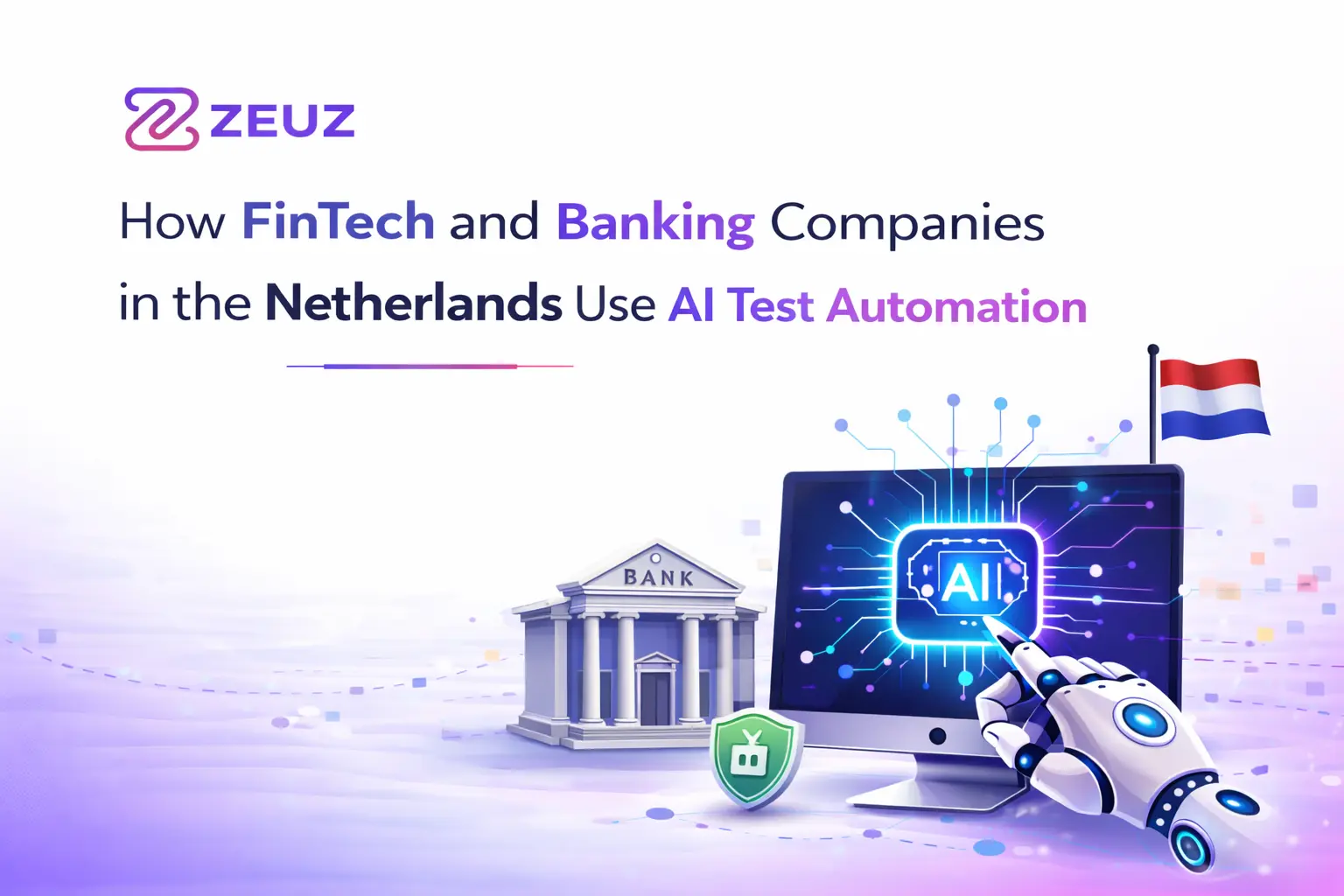
The Netherlands is one of Europe’s most advanced fintech ecosystems. From digital banks in Amsterdam to payment innovators operating across the EU, Dutch financial institutions move fast, but they operate under strict regulatory pressure.
In this environment, quality assurance is not just about preventing bugs. It’s about protecting customer trust, maintaining compliance, and ensuring operational resilience.
That’s why AI test automation is becoming a strategic pillar for fintech software testing in the Netherlands.
The Regulatory Landscape for Dutch Financial Institutions
Fintech and banking organizations in the Netherlands operate under oversight from:
These frameworks require:
-
Secure handling of personal and financial data
-
Strict access control enforcement
-
Transparent audit logging
-
Resilient system performance
-
Incident traceability
In traditional testing models, meeting these expectations through manual validation is slow and error-prone.
AI-driven automation changes that.
Why Fintech Software Testing in the Netherlands Is More Complex Than Ever
Dutch banking platforms today include:
-
Web applications
-
Mobile banking apps (iOS & Android)
-
APIs and open banking integrations
-
Microservices architectures
-
Real-time payment systems
Every release must validate:
Without automation, release velocity and compliance confidence collide.
How AI Test Automation Supports Dutch FinTech and Banking Teams
1. Continuous Compliance Validation
GDPR compliant testing in the Netherlands requires:
-
Data encryption validation
-
Consent handling verification
-
Data retention logic checks
-
Access control enforcement
AI-powered automation platforms can run continuous checks across:
-
UI flows
-
API responses
-
Database layers
Instead of validating compliance during audits, fintech teams validate compliance during every deployment.
2. Intelligent Test Generation for Complex Banking Workflows
Banking systems involve:
AI-driven tools can convert business requirements into executable test cases. This accelerates coverage expansion without requiring large scripting teams.
For fast-growing Dutch fintech companies, this reduces bottlenecks between compliance, QA, and development teams.
3. Secure API and Open Banking Validation
Open banking initiatives require secure APIs that expose financial services to third parties.
Banking test automation in the Netherlands must validate:
AI-powered test platforms continuously simulate API interactions and validate secure response handling.
This ensures integrations meet regulatory and operational standards before they reach production.
4. Self-Healing Automation for Evolving User Interfaces
Fintech applications frequently update their:
-
Dashboard layouts
-
Transaction views
-
Investment modules
-
Authentication screens
Traditional test scripts often break when UI elements change.
AI-powered self-healing automation detects changes in element attributes and adapts test execution automatically. For fintech teams releasing frequently, this reduces maintenance effort and preserves pipeline stability.
5. Risk-Based Test Prioritization
AI systems can analyze:
They then prioritize testing where risk is highest.
In banking environments, this approach helps focus validation efforts on:
For Dutch financial institutions, risk-based automation aligns testing directly with regulatory exposure.
CI/CD and DevOps in Dutch Banking
Modern fintech companies in the Netherlands use CI/CD pipelines to deploy features quickly.
However, continuous deployment in financial systems demands:
AI automation integrates into DevOps workflows to ensure:
-
Every commit triggers compliance validation
-
Security tests run before deployment
-
Audit logs are verified automatically
This transforms QA from a release gate into a continuous safeguard.
GDPR-Compliant Testing in Practice
Under the General Data Protection Regulation, financial institutions must demonstrate:
AI-driven testing platforms can validate:
-
Session timeout enforcement
-
Role-based access visibility
-
Encryption standards in APIs
-
Data masking in user interfaces
This creates audit-ready evidence that security controls function consistently, not just during annual reviews.
Operational Benefits for Dutch FinTech Teams
Beyond compliance, AI test automation delivers measurable operational improvements:
For fintech startups competing in the Netherlands’ dynamic financial market, speed and reliability directly impact growth.
The Strategic Shift in Dutch Banking Test Automation
Traditional automation frameworks require heavy scripting and constant maintenance.
AI-powered automation introduces:
-
No-code or low-code test creation
-
Self-healing capabilities
-
Centralized reporting dashboards
-
Cross-platform validation
For Dutch fintech organizations operating under De Nederlandsche Bank oversight and GDPR requirements, this approach provides both agility and governance.
Final Thoughts
Fintech software testing in the Netherlands is no longer just about functionality.
It is about:
AI test automation enables banking and fintech companies to scale innovation while remaining compliant with national and European standards.
Frequently Asked Questions
1. Why is AI test automation important for fintech companies in the Netherlands?
AI test automation is important for fintech companies in the Netherlands because financial systems must meet strict regulatory, security, and performance standards while maintaining rapid release cycles. AI-driven testing enables continuous compliance validation, reduces manual effort, and ensures transaction integrity across web, mobile, and API platforms.
2. How does AI test automation support compliance with De Nederlandsche Bank and GDPR?
AI test automation helps organizations comply with oversight from De Nederlandsche Bank and the General Data Protection Regulation by embedding security validation directly into CI/CD pipelines. It continuously verifies data encryption, access controls, audit logs, session management, and API authentication before deployment.
3. What challenges do Dutch banking platforms face in software testing?
Dutch banking platforms must validate multi-layered systems including web applications, mobile apps, APIs, open banking integrations, and microservices architectures. They must ensure transaction accuracy, role-based access enforcement, real-time payment reliability, and regulatory traceability, making traditional manual testing insufficient.
4. How does AI-powered test automation improve API and open banking security?
AI-powered test automation continuously simulates secure API interactions to validate token authentication, rate limiting, encrypted data transmission, and error handling consistency. This ensures open banking integrations meet both regulatory and operational standards before going live.
5. What is self-healing automation and why does it matter in fintech?
Self-healing automation uses AI to automatically adjust test scripts when UI elements change. In fast-evolving fintech applications, this prevents pipeline failures caused by dashboard updates, authentication flow changes, or transaction interface modifications, reducing maintenance effort and preserving DevOps stability.
6. How does risk-based test prioritization benefit Dutch financial institutions?
AI systems analyze historical defect data and high-risk transaction paths to prioritize testing where regulatory and financial exposure is highest. For Dutch banks and fintech firms, this ensures critical areas such as payment processing, account permissions, and sensitive data handling receive maximum validation before deployment.